
WhatsApp Customer Service Automation: How Smart Businesses Handle 200+ Inquiries a Day
You open your phone at 7 AM. There are 83 unread WhatsApp messages. Some are from last night. A few are from 5 AM. Your first feeling is not productivity — it is dread. By the time you have typed out replies, a dozen more have come in. The backlog never clears. Some customers never hear back at all. You already know what that costs.
This is not a staffing problem. It is a volume problem — and it is getting worse. WhatsApp customer service automation is how high-volume teams solve it today. Here is why the problem happens, what it is quietly costing your business, and how tools like BobWork make it manageable.
Why WhatsApp Customer Volume Keeps Growing Every Year
Direct Answer: Customers prefer WhatsApp over email and phone because it is instant, familiar, and requires no hold music. As more businesses list WhatsApp as a contact option, customer expectations for fast replies have risen dramatically — driving volume up year on year.
WhatsApp crossed 3 billion users globally in 2024. For most people in Southeast Asia, the Middle East, Latin America, and large parts of Europe, it is the default communication layer — not just for family, but for everything. Booking a property viewing. Asking about tuition fees. Following up on an insurance quote. Checking if an item is back in stock.
The moment a business adds a WhatsApp number to its website or social media, it signals: "You can reach us here." Customers take that seriously. They expect replies within minutes — the same way they would expect a response from a friend.
Email carries a 24-hour response norm. Phone calls require someone to pick up. WhatsApp sits in between: it feels personal, low-friction, and immediate. That perception gap is exactly what drives volume up. A business that might have received 20 email inquiries a day now receives 120 WhatsApp messages — carrying the same expectation of a fast, human reply.
For most small and mid-sized businesses, the infrastructure never caught up with that shift.
The Hidden Cost of Slow WhatsApp Replies
Direct Answer: Research consistently shows that leads contacted within five minutes are dramatically more likely to convert than those contacted after an hour. On WhatsApp, customers do not wait — they simply message your competitor. Slow replies do not just frustrate customers; they destroy revenue quietly and without a trace.
Consider a property agent receiving 40 inquiry messages a day. Each message represents a potential buyer or tenant. If the agent is out showing units — as they should be — those messages sit unread for hours. By the time they reply, the prospect has already booked a viewing with another agency. The lead was never logged. The loss is invisible.
The same pattern plays out across industries:
- Education and tuition centres: A parent messages asking about enrolment availability. They send the same message to three other centres. The first one to reply warmly and provide clear pricing wins the registration.
- Insurance brokers: A prospect asks for a motor insurance quote. Timing is everything — they are comparing options, often all at once. A delayed reply loses the sale without a single rejection.
- Retail and online stores: A customer asks if a product is available before deciding to order. If there is no reply, they buy elsewhere. The business never knows it happened.
- Professional service bookings: A client wanting to book a legal consultation, physiotherapy appointment, or financial review will move on if the first touchpoint feels unresponsive.
Slow replies are not just an inconvenience. They are a measurable drain on conversion — and most businesses are bleeding revenue this way every single day.
Why Hiring More Staff Does Not Fix the Problem
Direct Answer: Hiring more people scales your costs linearly while your message volume compounds. You need three times the staff to handle three times the volume — but message spikes, off-hours inquiries, and repetitive questions make this deeply inefficient. The math never works out in your favour.
It feels like the obvious fix. If 200 messages a day is overwhelming one person, hire another person to help. But this assumption ignores several realities:
Volume does not distribute evenly. A retail promotion can generate 300 messages in one afternoon. Hiring for peaks means paying for idle time during every normal week.
Off-hours inquiries do not stop. Customers browse, compare, and inquire at 11 PM, on Sunday mornings, and during public holidays. Staff cannot be on call 24 hours a day without serious cost and burnout.
Most messages are repetitive. A study of business WhatsApp accounts typically finds that 60–70% of incoming messages ask questions that have been answered hundreds of times before: operating hours, pricing, location, delivery timelines, return policies, product availability. A human answering these questions is not adding value — they are running in place.
Staff turnover compounds the problem. Every time a customer-facing staff member leaves, institutional knowledge walks out the door. Training a replacement takes weeks. The quality of replies drops in the interim.
Hiring more staff is a short-term patch. It does not change the underlying architecture of how messages are handled.
WhatsApp Customer Service Automation: How AI Handles Volume Without Losing the Human Feel
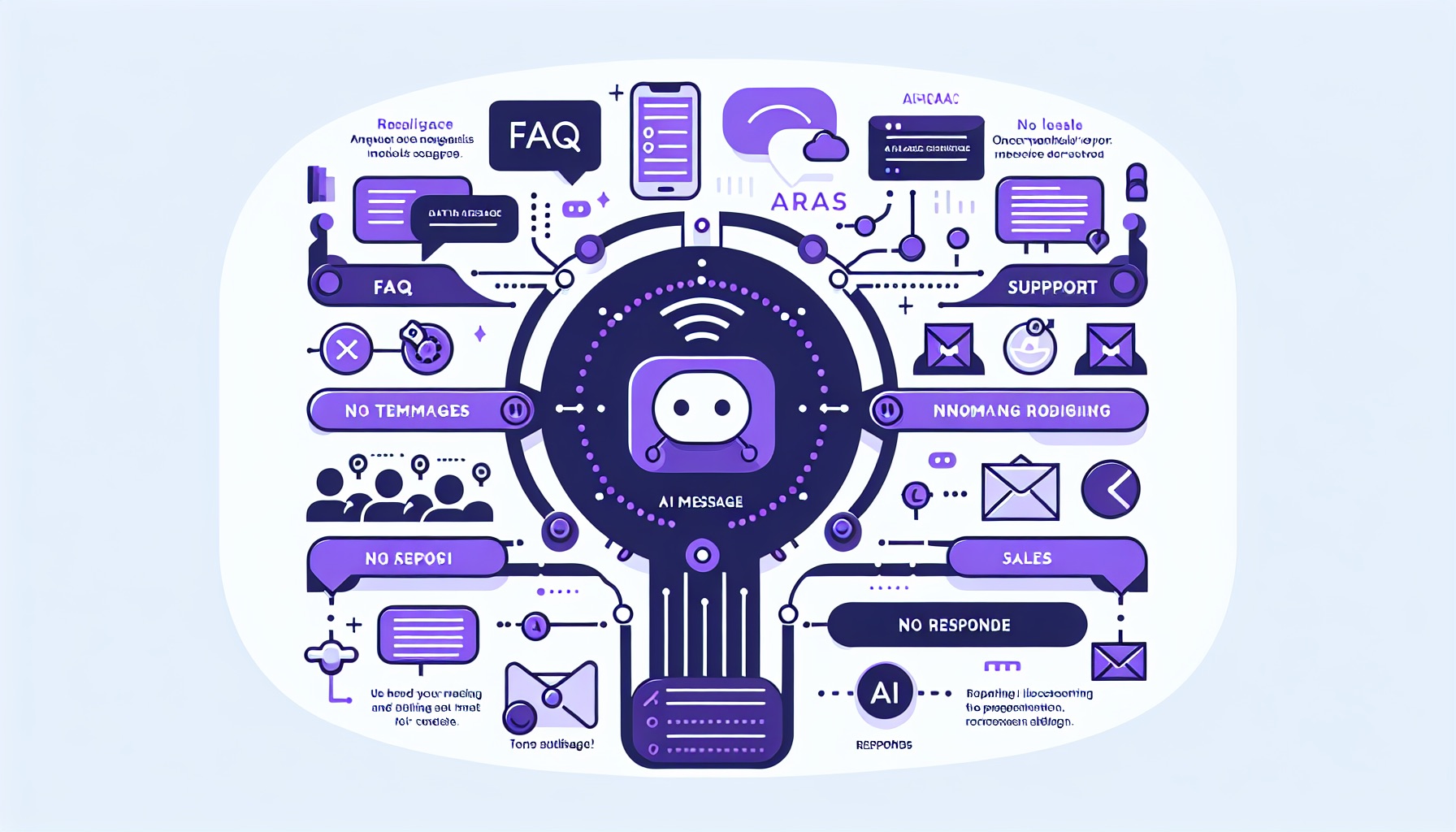
Direct Answer: A well-trained AI agent handles repetitive, high-volume inquiries instantly — 24 hours a day — while sounding like the business it represents. It does not sound robotic because it is trained on the business's own language, tone, and knowledge. Human staff are freed for conversations that genuinely require judgement, empathy, or escalation.
The key word is "trained." A generic chatbot answers questions from a template. An AI agent trained on your business — your pricing, your policies, your product details, your team's actual communication style — answers questions the way your best staff member would, immediately, every time. This is the core of effective whatsapp customer service automation.
BobWork takes this further by letting you upload your entire knowledge base — FAQs, pricing sheets, product catalogues — and trains an AI agent that replies in your brand voice around the clock.
What Happens When Volume Spikes
During a flash sale or promotional campaign, inbound WhatsApp messages can spike 5–10x in a matter of hours. Without automation, that spike overwhelms your team and leads to missed leads. With BobWork's whatsapp auto reply for business, every message gets an instant, accurate response regardless of volume.
How Tone and Brand Voice Are Preserved
AI agents are not one-size-fits-all. BobWork lets you configure the personality, tone, and vocabulary of the agent — casual and friendly for a retail brand, professional and precise for a financial services firm. Customers do not feel like they are talking to a bot; they feel like they got a fast, helpful reply.
Here is what that looks like in practice:
A tuition centre trains its AI with enrolment details, class schedules, fees, age group requirements, and trial class availability. When a parent messages at 9 PM asking "Do you have classes for a 7-year-old on Saturday mornings?", the AI replies within seconds with accurate, warm, specific information. The parent books a trial class before going to bed. No one on the team did anything.
An online clothing retailer trains its AI on its size guide, shipping zones, return policy, and popular product details. When 50 customers message during a flash sale asking about stock and delivery times, all 50 receive accurate, brand-consistent replies instantly. Conversions happen. Staff are available for exchanges and issues the next morning.
What the AI Should Handle vs. What Stays Human
Direct Answer: AI handles high-volume, repetitive, information-based inquiries — hours, pricing, availability, policies, bookings, FAQs. Humans handle complaints requiring empathy, refund disputes, relationship-sensitive conversations, and anything requiring real-time judgement or authority. The handoff between the two is the most important design decision.
A clear split keeps quality high and prevents AI from being deployed where it should not be.
Tasks Best Suited to Automation
- Operating hours, location, directions
- Pricing and package details
- Product availability and specifications
- Shipping timelines and delivery zones
- Return and refund policy (stating the policy, not processing the refund)
- Appointment booking and confirmations
- FAQ responses about services, programmes, or products
- Initial lead qualification (collecting name, requirement, and contact details)
Tasks That Stay With Your Human Team
- Complaints involving frustration, loss, or a bad experience
- Refund requests requiring investigation or exception
- Negotiation or custom pricing discussions
- High-value clients where relationship matters
- Anything requiring access to live order or account data
Most businesses find that 60–75% of their incoming volume sits cleanly in the automation column. That is the majority of messages handled instantly, at no cost in staff time, around the clock.
Manual vs. Automated WhatsApp Customer Service: A Comparison
| Factor | Manual (Staff Only) | WhatsApp Customer Service Automation |
|---|---|---|
| Response time | Minutes to hours | Under 60 seconds, 24/7 |
| Off-hours coverage | None (or costly on-call) | Full coverage always |
| Handles volume spikes | Overwhelmed, leads missed | Scales instantly |
| Repetitive Q&A | Staff time wasted | Handled automatically |
| Cost to scale | Linear (hire more staff) | Near-zero marginal cost |
| Tone consistency | Varies by staff member | Consistent brand voice |
| Lead capture rate | Drops during busy periods | Consistent capture 24/7 |
| Human escalation | Ad hoc | Structured handoff to staff |
A Day in the Life: Before and After AI
Direct Answer: Before AI, a business owner or customer service staff member spends 2–4 hours daily on repetitive WhatsApp replies, misses off-hours leads, and carries the stress of a never-emptying inbox. After AI, that time collapses to under 30 minutes of reviewing flagged conversations — while response rates and lead capture improve significantly.
Before AI — A Real Pattern
7:02 AM: Owner opens WhatsApp. 83 unread messages. Some from last night. Works through them for 45 minutes before the day has even started. Misses three because the conversation thread got buried.
12:30 PM: 40 new messages during the lunch rush. Replies between bites. Makes an error on a pricing quote because they are rushing.
6:00 PM: After a full day, another 60 messages to work through. Staff member handling WhatsApp is visibly burnt out. Three customers marked as "will reply later" have already messaged to say they went elsewhere.
11:00 PM: Five more messages come in. Nobody replies until tomorrow.
Total leads missed: unknown. Total time on WhatsApp: 3.5 hours across the team.
After AI — The Same Business, 30 Days Later
7:02 AM: Owner opens WhatsApp dashboard. AI handled 71 of the 83 overnight messages. 12 were flagged as needing human attention — one complaint, three interested leads requesting callbacks, a few edge cases. Owner reviews these in 15 minutes.
12:30 PM: AI handles the lunch spike automatically. Staff focus on the two flagged conversations.
6:00 PM: The end-of-day queue has 8 flagged items, down from 60. Staff finish in 20 minutes and leave on time.
11:00 PM: Five late messages received. All replied to within 60 seconds. Two result in booked appointments by morning.
Total leads missed: zero. Total human time on WhatsApp: under 40 minutes.
Frequently Asked Questions
Will my customers know they are talking to an AI?
That depends entirely on how the AI is trained. An AI trained on your tone, vocabulary, and business personality answers the way your team would answer — quickly, accurately, and in your voice. Many customers assume they reached a fast, helpful staff member. If you prefer full transparency, you can configure an introduction that sets expectations clearly from the start. BobWork lets you customise this behaviour per agent.
What happens when the AI does not know the answer?
A well-configured AI has a fallback: it tells the customer it will flag the question for a team member and ensure someone follows up. The conversation is routed to a human who handles it from there. This is far better than silence, which is what most overwhelmed teams deliver today.
Is whatsapp customer service automation suitable for businesses outside retail?
Absolutely. The volume problem is just as acute in property, insurance, education, healthcare, and professional services — often more so, because each inquiry represents a high-value lead. WhatsApp customer service automation handles the initial intake, qualifies the lead, answers standard questions, and passes ready-to-convert prospects directly to your team.
How long does it take to set up with BobWork?
Most businesses are live within a day or two. Setup involves uploading your business knowledge — FAQs, pricing, policies, product details — and letting BobWork learn your communication style. The more specific the inputs, the better the outputs from day one. The whatsapp chatbot for small business setup is designed to be no-code and fast.
What if the AI gives wrong information?
You train and review the AI on your knowledge base. If a detail changes — a price update, a new policy — you update the source and the AI reflects that. Over time, the accuracy improves. No AI is perfect at launch, which is why human oversight for flagged and complex conversations remains part of the workflow.
How is this different from WhatsApp Business auto-reply?
WhatsApp Business offers basic away messages and quick replies — but these are static templates that cannot answer dynamic questions. True whatsapp customer service automation means the AI reads the customer's actual question and generates a relevant, accurate reply drawn from your knowledge base. BobWork operates at that level.
Conclusion
The WhatsApp message volume problem is not going away. Customer expectations for fast replies are only rising — and the businesses that respond the fastest are the ones capturing the most leads, building the most loyalty, and growing while their competitors still wake up to 80 unread messages every morning.
WhatsApp customer service automation does not replace your team. It protects them. It handles the flood so your people can focus on the conversations that actually need a human touch. The result is faster replies, fewer missed leads, and a customer service operation that works around the clock without burning anyone out.
If your WhatsApp inbox feels like it is running your business instead of the other way around, it is time to change the architecture.
Try BobWork free for 14 days — no credit card required. Start your free trial at bobchat.ai